

Adel Delasoud Carpet
History of Persian Carpets
Persian carpets are among the oldest and most celebrated works of textile art in the world. More than simple floor coverings, they embody the rich history, culture, craftsmanship, and artistic heritage of Iran. For over 2,500 years, Persian carpets have reflected the country's traditions, beliefs, and aesthetic values while earning worldwide recognition for their exceptional quality and beauty.
Ancient Origins
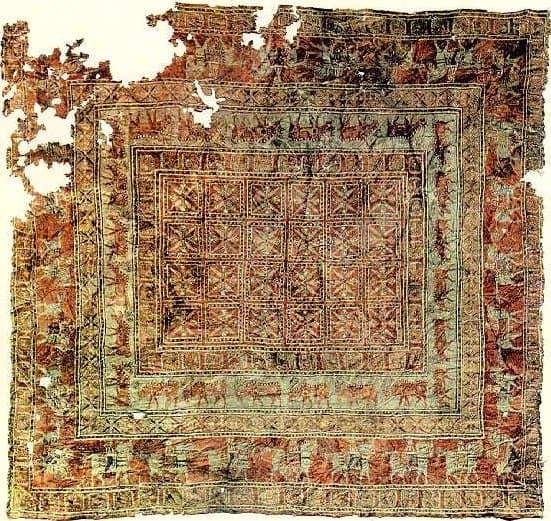
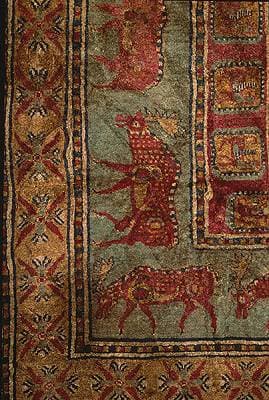
The earliest known carpet in history is the Pazyryk Carpet, dating to the 5th century BC. Discovered in 1949 in the Pazyryk Valley of Siberia, it is widely believed by many scholars to have been woven within the Persian cultural sphere, most likely during the Achaemenid Empire. Its sophisticated knotting technique, intricate floral motifs, and horsemen designs demonstrate that carpet weaving in ancient Persia had already reached a remarkable level of development.
The Sasanian Period (224–651 BC)
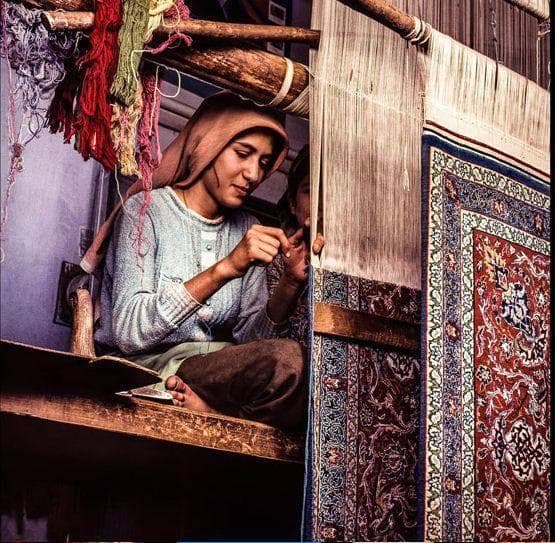
During the Sasanian Empire, Persian textile arts flourished. The most famous carpet of this era was the legendary Baharestan (Spring of Khosrow), a magnificent royal carpet woven with silk, gold, silver, and precious stones. Designed to resemble a spring garden in full bloom, it decorated the imperial palace at Ctesiphon until it was taken apart after the Arab conquest of Persia.
The Early Islamic Period
Following the Islamic conquest, carpet weaving continued to develop throughout Iran. Although few carpets from this period have survived, historical records describe Persian carpets as highly prized luxury goods. During the Seljuk and Ilkhanid periods, new artistic influences enriched traditional Persian designs, laying the foundation for the masterpieces of the Safavid era.
The Golden Age – The Safavid Dynasty (1501–1736)
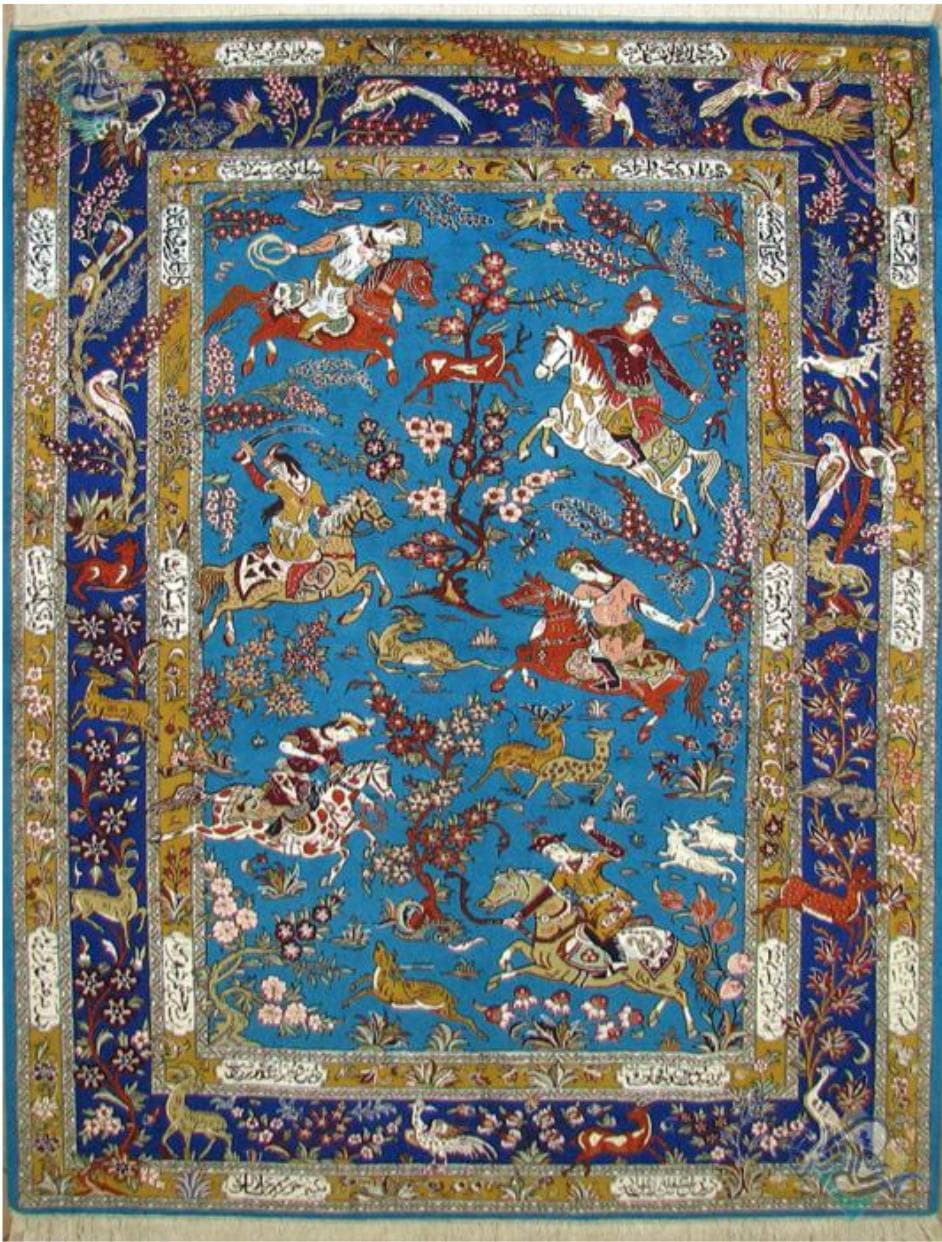
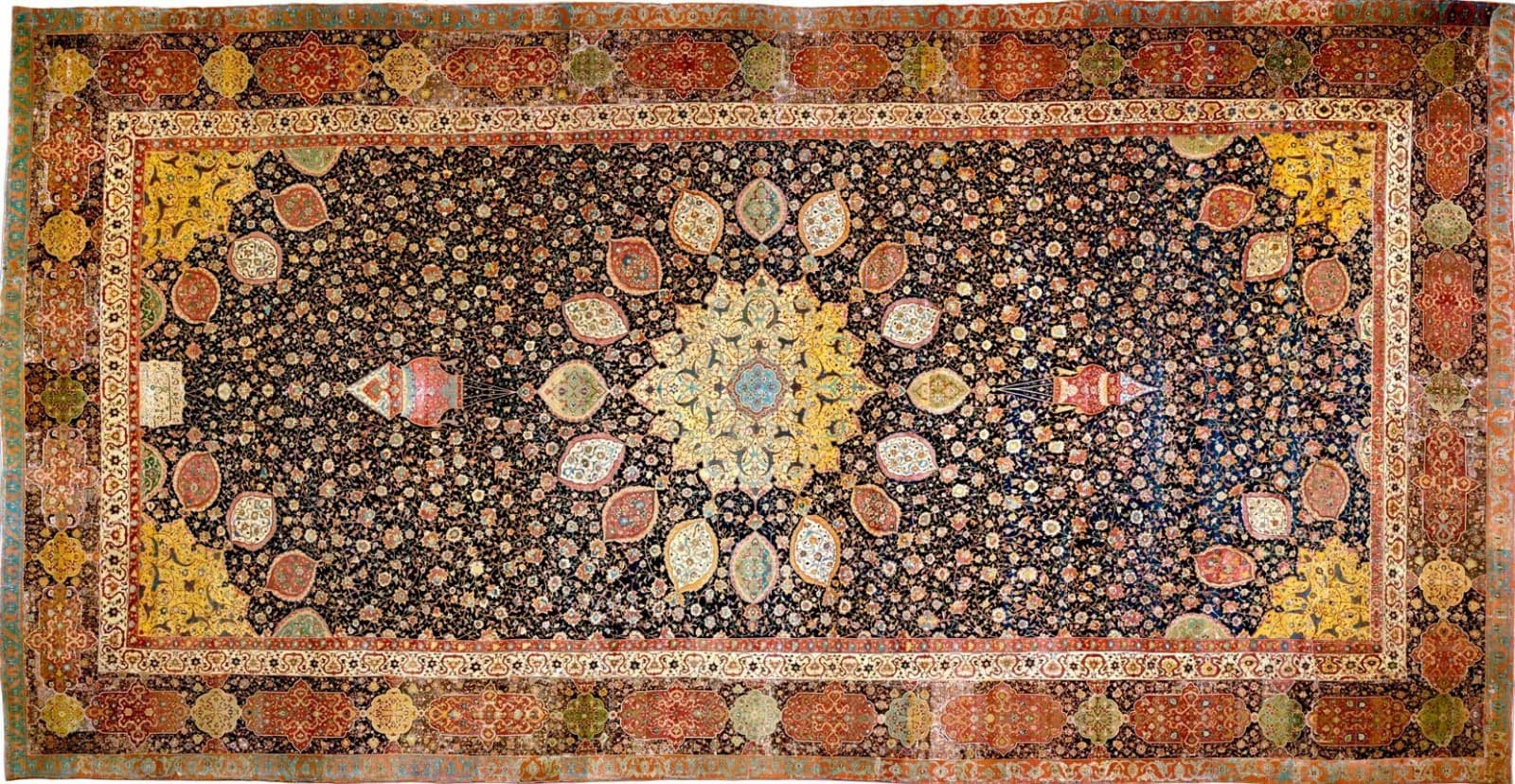
The Safavid period is universally regarded as the Golden Age of Persian carpet weaving. During this era: • Royal workshops were established in cities such as Tabriz, Isfahan, Kashan, and Kerman. • Master designers created sophisticated floral, medallion, hunting, and garden patterns inspired by Persian miniature painting. • Persian carpets became highly sought-after luxury items in Europe and Asia. • Some of the world's finest carpets, including the famous Ardabil Carpet, were produced during this period. Many museum-quality carpets preserved today date from the Safavid dynasty.
The Afsharid and Zand Periods
Although royal patronage declined after the Safavids, carpet weaving continued across Iran. Regional workshops preserved traditional techniques and designs while adapting to local artistic styles.
The Qajar Period (1789–1925)
The 19th century marked a revival of Persian carpet production driven by growing international demand. During the Qajar era: • Carpet exports expanded rapidly to Europe and North America. • Foreign trading companies established workshops in Tabriz, Sultanabad (Arak), Kerman, and Kashan. • Persian carpets became one of Iran's most important export products. Many of the antique Persian carpets found in today's collections were woven during this period.
Contemporary era
Today, Iran remains one of the world’s most important centers of handwoven carpet art. Each region of Iran has its own distinctive colors, motifs, knotting techniques, and design traditions. Among the most important carpet-producing centers are:
Each has its own distinctive style, motifs, color palette, and weaving technique. In addition to its artistic value, the Persian carpet is recognized as a cultural heritage and a valuable commodity in global markets.
Characteristics of Persian Carpets
The main features that make Persian carpets special are:
Use of high-quality hand-spun wool and silk
Natural and plant-based dyes
Persian and Turkish knotting techniques
Fine and detailed hand craftsmanship
Floral and botanical motifs
Medallion compositions
Designs inspired by Persian gardens
Hunting and nature scenes
Geometric and tribal motifs
High durability
Artistic, historical and collectible value
A Living Cultural Heritage
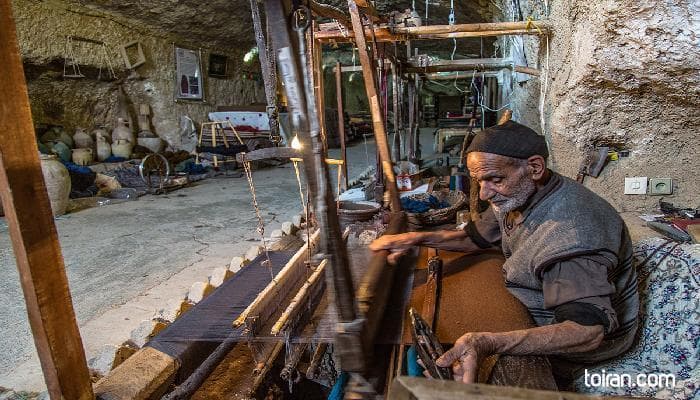
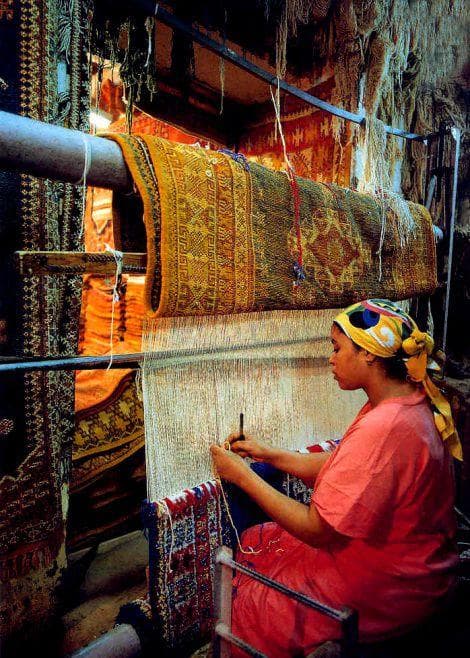
Persian carpets represent an artistic and craft tradition that has been passed down from generation to generation for centuries. Each handwoven carpet tells a unique story through its colors, motifs, knotting technique, and design. A carpet carries more than just patterns; it also reflects the way of life, relationship with nature, beliefs, and cultural memory of the community that created it. For this reason, a Persian carpet is not merely a carpet, but a living heritage that carries Iran’s history, art, and cultural identity. Today, antique and rare Persian carpets attract great interest from museums, collectors, art specialists, and carpet enthusiasts because of their aesthetic beauty, rarity, age, and historical value.